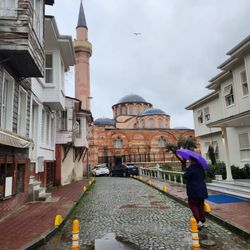
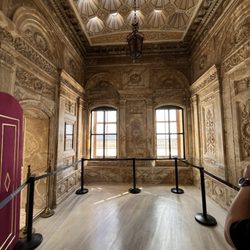
The Chora Church is one of the most amazing old churches I have ever seen. As with all the high…read moretraffic tourist sites, it's better in the off season. I would read up on it before you go, and bring a good guide book, Rick Steve's Istanbul is by far the best for Chora, but Lonely Planet and National Geographic are pretty good too. The acme of Byzantine art was the wall mosaic and there is no better existing example anywhere. St. Savior in Chora is now known locally as Kariye Camii because it's a hybrid museum and active mosque. The church is just inside the city walls, so I would spend a day starting here and then do Rick Steve's "City Walls and Neighborhoods walk" but it will take longer than he projected if you have the sort of wanderlust and curiosity that makes you take longer and of course even longer if you have to make friends with all the cats along the way. Note that all the guidebooks reporting free WCs here or at any mosque are already out of date, you have to pay a small fee so I learned to carry small Turkish bills. The current church building dates back to 1100, damaged by Crusaders (not the Motown stars) in the 1200s, reconstructed by patron Theodore Metochites. prime minister of the Byzantine Empire. In the early 16th century during Ottoman rule, the church was converted to a mosque and a minaret was added.
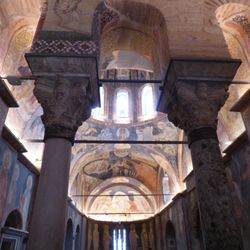
After the East West split of the Christian Church, Occidental Christianity art and architecture became provincial, local customs, local saints, local interpretations. But the Eastern Orthodox Church remained consistent across centuries and the artistry here became an archetype. Eastern Orthodox churches are adorned with flourishes and decorations that echo the beautiful old mosaics here. Their goal was to show how God became mortal on behalf of human beings, transforming Oriental liturgy into reality. Don't compare the superior work here with the Basilica of San Vitale in Ravenna (6th century), different epochs, different theodicy. I'm Buddhist so I needed a primer on Christian legend and scripture but even given that, remember, the past is foreign. Included in these mosaics are apocryphal writings, then part of cannon in practice. The narthexes, inner and outer, contain most of the mosaics. Next to the nave is a side chapel (parekklesion) with frescoes. I especially liked the syncretic Mary depictions that worked in the pre-Christian Anatolian mother-goddess. and the biblical genealogy of Christ on a ceiling dome. You can make out Adam standing on a snake (the ancestry is in Aramaic Greek but many have attributes depicted, it's all in the flutes emanating away from, or actually leading up the Christ), Noah carrying an ark. Near are depictions of Christ's miracles. You are going to need Ibuprofen handy because you're going to be craning your neck a lot. Actually in Turkiye you can get Dexofen, a safer more effective NSAID that is not available in the USA, which works well on neck pain. Also don't miss the "Dormition of the Virgin," I guess Mary didn't ever die, she went to sleep forever, but this mosaic depicts her final bed.
It's an easy bus ride, go to the Egrikapi Gate and it's a short walk. Istanbul buses are easy, comfortable, and cheap. It's a little intimidating taking a bus when you don't speak any Turkish, but they can easily read your destination from your phone, just show it to a bus worker at the depot and they will get you on the right bus. They are more helpful than Chicago Transit Authority or Milwaukee County Transit Authority workers by far.