Cancel

Open app

Search

Exeter's Underground Passages

3.4 (5 reviews)

Exeter's Underground Passages Photos

Recommended Reviews - Exeter's Underground Passages

Your trust is our priority, so businesses can't pay to alter or remove their reviews. Learn more about reviews.
Yelp app icon
Browse more easily on the app
Review Feed Illustration

14 years ago

Helpful 0
Thanks 0
Love this 0
Oh no 0

17 years ago

Helpful 0
Thanks 0
Love this 0
Oh no 0

16 years ago

Helpful 0
Thanks 0
Love this 0
Oh no 0

15 years ago

Helpful 0
Thanks 0
Love this 0
Oh no 0
Helpful 0
Thanks 0
Love this 0
Oh no 0

Verify this business for free

Get access to customer & competitor insights.

Verify this business

A La Ronde

A La Ronde

(4 reviews)

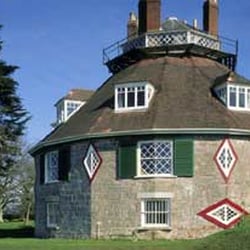
One of the most unusual buildings owned by the National Trust, this 16 sided property is a…read moretestament to English eccentricity! Built by two spinsters on their return from their grand tour in the 18th Century this building is bound to inspire and intrigue. The guides here are amongst the best that the NT has to offer and they will guide you through the myraid of tiny rooms with enthusiasm in buckets! The highlight of the tour is the shell room in the top of the property. This, for reasons of preservation, now has to be viewed through CCTV but you are able to control the camera and zoom in on anything that takes your fancy. The tea-room in the basement of the property is well worth a visit and the food of excellent quality. This is a small property and so groups can only be accommodated by arrangement. Bags must also be left in lockers at the start of the tour as the rooms are too small and fragile.

A bizarre building close to Exmouth that is well worth a visit! It's actually quite hard to…read moredescribe without going into huge detail. It is basically a quite bonkers designed house, packed full of a variety of rooms, which in turn are packed full of all kinds of bits and bobs. There is even a room that has the walls covered in shells (although you have to look at this through a video link) There are highly knowledgeable staff in almost all of the rooms willing to tell you in detail about the various parts of the building. The tea-shop in the basement is worth trying out - the soup we had was great. It's also worth pointing out that it gives you shelter from the elements if the weather is bad - once we stepped outside the wind almost blew us into the sea!

Church of St Mary Magdalene - St Andrew's Chapel

Church of St Mary Magdalene

(3 reviews)

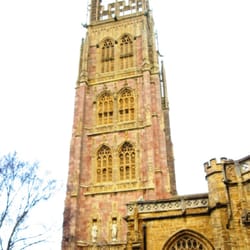
The ancient County Town of Somerset has a church worthy of its status and history, famous for its…read moresplendid tower, which is a landmark for miles around. The early history of the church is obscure: Taunton was the home of a great Augustinian Priory under the control of the Bishops of Winchester, who were also Lords of the Manor until the 19th century. The town that grew up alongside the castle and Priory looked to the Priory for many of its spiritual needs, but the townspeople probably had their own church on the present site from at least the 11th century onwards. However, the first recorded mention of the church is in the 13th century, and foundations of that age have been found during various archaeological excavations. In 1308 the church became independent of the Priory, and over the next two hundred years was rebuilt into the form we see to-day. From the outside and particularly from the perfect view between the Georgian houses of Hammet Street the dominant feature is its tower. Somerset is famed for its huge towers, built in the 15th and early 16th centuries on the wealth that came from the wool trade. They are divided into the Wells group, with vertical emphasis, and the Taunton group, with horizontal emphasis. Unsurprisingly, St Mary's belongs to the latter group, and is the grandest by far. At 163ft, (50m) it can be seen for miles. It is built in a striking red sandstone, with window openings and tracery in golden Ham stone. Constructed in 1514, the present tower is actually a copy (albeit an exact one using much of the original materials) completed in 1862, after the original became unsafe. The other external feature is the generous south porch, dating from 1508, and decorated with elaborate niches, although the statues are Victorian replacements for those destroyed in the Reformation. Indeed, much of the decoration in the church had to be replaced, following extensive damage during the Commonwealth period Taunton was a staunch Puritan town. The interior is splendid the plan is almost square, thanks to its generous double aisles, giving the impression of a forest of columns. The oldest elements are the arcade arches at the east end of the nave, which date from the late 13th century. Otherwise, most of the fabric dates from the 14th and 15th centuries. Of particular note is the 15th century carved wooden roof, with its gilded angels a Somerset tradition. There are more angels carved on the nave capitals and corbels. Although most of the furnishings are Victorian, there are some attractive memorials: on the north wall, an almost life-size statue of Robert Graye, (1570-1635), flanked by columns and topped with a arched pediment, recalls a famous son of Taunton and a generous benefactor, who built almshouses for the poor in East Street, which are still in use to-day. The windows in the north aisle contain fragments of brightly coloured mediaeval glass. Another benefactor was Richard Huish, (d. 1615), and his plainer but still attractive memorial is found on the South wall. At the west end of the inner aisle, is a stone memorial to Thomas More, (d. 1576), second owner of the Priory following the Dissolution. To-day it provides the backdrop to the small shop, selling cards and fairly traded items. Opposite, in the North Aisle, is a small but lively café, apparently catering to a regular group of pensioners. Finally, this church has a personal connection, which makes it especially interesting to me: my Great-Great-Great Grandfather and Grandmother were married here, in July 1828.


This is the largest church in Somerset, situated right in the centre of its county town, Taunton…read more I can thorougly recommend this as a place to get married! The church is really spacious and so you can have as many seated guests as you can wish. They will organise beautiful flowers for you and, of course, the photographs look great with such an amazing place in them. The vicar has changed since we got married and so I can't say what he is like but our day was really special.

Buckland Abbey

Buckland Abbey

(1 review)

Wonderful if you can find it…read more This property is deep in heart of Devon and it took some doing to get there. Since it was originally constructed as a monastery in 1278, it is in a secluded location. There are many winding roads and narrow lanes en route. But every child spends time learning about the explorers and both of my boys were particularly fascinated by Sir Francis Drake. So when choosing which National Trust homes to visit, the Drake family home seemed like a perfect fit. It turned out to be my favorite. A large part of my (and particularly my son's) enjoyment was due to the educational aspect. Not just some dry lecture, they had a young guy on site in period costume discussing weapons. In particular archery and some of the great military campaigns against the French. Really cool stuff. Inside Buckland Abbey, there is also wonderful information about Sir Francis Drake. Videos about his voyage around the world and his victory over the Spanish Armada. He grew up nearby, then purchased the abbey once he became one of England's most successful explorers and a favorite of the queen. There is a lovely Elizabethan Garden and the barn is used for special events and exhibitions. On the upper floor, there are also outfits that the kids can try on to visualize another time and place. Like many National Trust sites, there is an on-site cafe. We skipped it in favor of seeking out a local tavern and that was a bit of a mistake. This location is truly remote and it was a challenge finding other local options. When we visited London, we saw a replica of Drake's ship, The Golden Hind, moored along the Thames. I only wish my boys were writing their reports on Drake this coming term.

Launceston Castle

Launceston Castle

(3 reviews)

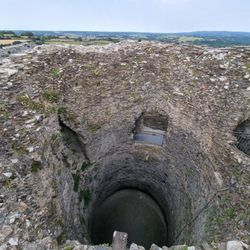
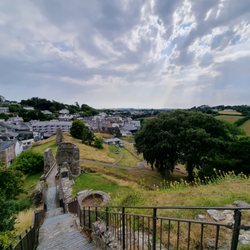
Came here in the late afternoon for a quick visit. Since we're members entrance was free. Our…read moreEnglish Bulldog was welcome on the site as well. The site is very nice and green. Very quiet when we've visited with only a handful of visitors. Surprising. Because even though not the biggest, it is a very interesting and beautiful castle. The big 13th-century round tower was built by Richard, Earl of Cornwall. You can climb up to the top to enjoy the views of the beautiful valley. The castle also served as prison and was also used as the base for the Cornish Royalist defence of the county. A very pleasant visit. Nice history, great surroundings. A small souvenir shop at the entrance as well. We enjoyed it. We parked our car at the nearby Westgate Street Multi-Storey Car Park and Coach Park. Only a few steps away.

This is a is a Norman motte and bailey earthwork castle on a high mound overlooking the town. It…read morewas once the administrative headquarters for the Earls of Cornwall who owned many estates throughout the region. It is thought that a castle was on this spot as early as 1067. In the 12th century a stone keep was constructed and then in the 13th century Richard of Cornwall held the earldom and made many alterations to the castle. After his death his son moved the administration to Lostwithiel which resulted in the castle's gradual decline in importance. It later became a prison for a time. Worth a visit if you are in the area, especially to see the views from the top. There is a nearby castle shop as well for souvenirs.

Glastonbury Tor - From the field

Glastonbury Tor

(8 reviews)

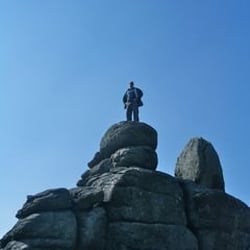
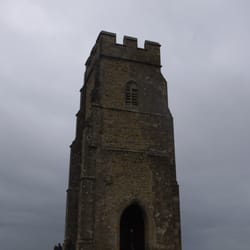
WOW! One of the best FREE things you can do on UK roadtrip...assuming you're in good health! There…read moreare two ways up, and easy way and hard way...we unfortunately took the hard way up, and the easy way down, but at least we can say we did both! It's a short hike either way but still wear good shoes, bring water, maybe food, sunglasses, and hat if its a sunny day. The wide panoramic views at the top are incredible on a clear sunny day. The tower is interesting though not completely amazing. It's more decorative than useful to be honest...I feel sorry the workers/slaves who had to haul up the stones so many centuries ago.

I've been a fan of Arthurian legends for as long as I can remember, and Glastonbury Tor standing…read moretall in my mind ever since playing "Conquests of Camelot" on my Tandy 386 back in the 80s. The solitary tower became, in my impressionable mind, not only a concrete symbol of the Arthurian mythos, but a tangible link to the stories that shaped my childhood, fostered my creativity, and sculpted my personality. I hoped to one day see it in person; to stand in its shadow, and absorb the impression of its history, and the aura of its legends. Glastonbury Tor is one of the proposed locations of the mythical Isle of Avalon, the "island in a sea of mist" upon which King Arthur was buried. There is some precedent for this belief, as the valley surrounding the hill is regularly filled with a thick white fog, as far as the eye can see. The hill of Glastonbury rises from this sea of roiling white like an island, with the lonely tower at its apex standing like a grave marker. And below, at the base of the Tor, within the ruins of Glastonbury Abbey, lie the graves of the man who inspired the legends of Arthur and Camelot. Truly, if there is an Avalon, this is it. As a child, I never thought I would actually see the day that I'd be standing atop that hill, 25 years later, my epic quest (journey? pilgrimage?) complete. Overwhelmed by this fabled obelisk, with its magnanimous legacy promising that the stories I had idolized contained at least a grain of truth, I wept tears of joy and contentment.

Exeter's Underground Passages - localflavor - Updated May 2026

Loading...
Loading...
Loading...