Solitude.
What does…read moreit mean to you?
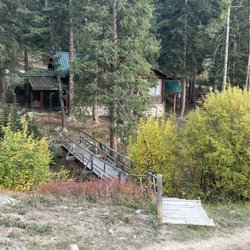
To me, solitude is a snow-covered ski trail framed by dense pine forests on top of the North American continental divide, located 7300 feet above sea level. A light snow is falling and there are six inches of fresh wet powder covering everything. I glide silently through forests, ridges, and meadows, accompanied by the sound of the wind and the occasional scent of spruce. At times, animal tracks cross the trail but otherwise all is empty and white. The snow absorbs everything but my steady breathing and elevated heartbeat. I am alone on historic ground near to where Chief Joseph and a party of 800 Nez Pierce men, women, and children retreated across the Bitterroot Mountains in 1877, chased and hunted by U.S. federal troops. I finish the Lost Trail loop and turn left up Broadway towards a two-story log cabin in the woods - the Gordon Reese warming hut, which is staffed in winter by a succession of eager volunteers. They keep the fire going and kitchen stocked with hot drinks and water.
It's like something out of a Robert Frost poem, except on a Western scale, not a New England one. Inside the cabin, a trio from Spokane are sitting around the communal table playing cribbage. I hang my wet clothes to dry by the cast-iron wood stove and ask to join them. We play a round together and share stories. I finish my tea ("Montana Gold," a rooibos, orange peel, and cinnamon blend) and head out for another circuit, past Windy Corner, along the Timber Trail, through the Sunny Meadow Loop, and back on Broadway to the parking lot. My car is covered in a thick layer of snow by the time I return. The skies have cleared a bit, and I change clothes for the 90 mile drive home, down the Bitterroot Valley back to Missoula.
This is not easy country. It's a high mountain pass above 7000 feet from which the head waters of the Columbia and the Missouri flow in opposite directions to reach their Pacific and Atlantic destinations. On my drive up in the morning, I literally saw falling rocks tumbling down the steep cliff to my left, and on the way down I passed an SUV upside down on the shoulder, its passengers thankfully uninjured on the side with state police and a tow truck to assist them.
The trail network at Chief Joseph is 25 kilometers long, well marked, mapped, and maintained by volunteers of the Bitterroot Ski Club. On good weather weekends, there might be a few dozen skiers on the trails, which are restricted to classical (Nordic) only and snowmobiles are not allowed.
But, if you crave solitude the way that I do, you'll find a way to come on a Friday morning when the rains fall in the valley and snow piles up in the mountains, where your tracks will be covered by the time you return, and where you will disappear into the trees heading down narrow, single-track trails. But you're not really alone: the warming hut is always open, and a few hardy solitude seekers are bound to appear by mid-morning or afternoon.
Solitude does not mean seeking separation from the world, but the opposite. It's when you discover a deep connection to the land around you: to the remote but accessible places on our common planet that are steeped in history and inhabited by wild creatures. Places like Chief Joseph Pass, where you are always welcome to visit, because it belongs to us all as national forest. Even the warming hut.
In some parts of America, they are eagerly anticipating the start of spring.
Here, in Montana, we're celebrating the last days of winter in solitude, but in style.
Come ski with me next time, at Chief Joseph. Solitude loves company. There is snow enough for everyone, and the cabin's fire is warm.