Chief Billy Bowlegs Photos


More like Chief Billy Bowlegs
Recommended Reviews - Chief Billy Bowlegs
Start your review...



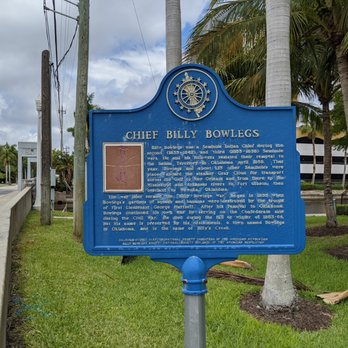
Chief Billy Bowlegs also known as Halpudo Micco or Alligator Chief is a colorful part of Fort Myers history. He was born in north Florida in 1810. He became famous as a 19th century chief during the Second and Third Seminole Wars. In 1830, President Andrew Johnson signed the Indian Removal Act which forced Native Americans to move from their tribal lands to territories in Oklahoma. The war was sparked over tension between the Native Americans of the area and the white settlers who were moving in. In an effort to get the Seminoles to move out west, Florida legislature signed off on a law making it illegal for Seminoles to hold residence in Florida and outlawed trading with tribal members. Billy Bowlegs refused to go out west on The Trail of Tears, so named because many of the Native Americans died on the trek. He opted instead to fight and hide with his people. The Seminoles were forced deeper into the Everglades as they launched raids and attacks against the US soldiers trying to round them up. By the 1850's fighting had ceased and Chief Bowlegs was finally enticed to leave Florida. He first settled in New Orleans before eventually making it to Arkansas territory were he was a chief. During his life he visited Washington, D.C., to advocate for the rights of his people. During the Civil War he served as a captain of an Indian regiment in the Confederate Army. He passed away in the mid 1860s from smallpox. I love discovering historical marker for the interesting history they provide and I spotted this unusual blue one on a recent trip through Fort Myers. It was sponsored by the Caloosahatchee Chapter National Society Daughters of the American Revolution and Billy Bowlegs Society National Society Children of the American Revolution. The marker is located on the north side of Palm Beach Boulevard. It was placed in honor of Billy on the banks Billy's Creek which carries his name today. It was were he and his followers surrendered on May 7, 1858 to the United States government. While Billy is long gone, his legend lives on in Fort Myers and in Oklahoma where there is a town named for him. In 2015 Billy Bowlegs powder horn appeared on episode of Antiques Roadshow from Little Rock. Billy presented the horn to the owners ancestor who was a Georgia Indian peacemaker. It is one of the few artifacts from the Seminole Wars to still be in existence. read more

This historical marker is blue. I've not seen a blue one before. It remembers a local native American and another dark time in US history. It reads, "Billy Bowlegs was a Seminole Indian Chief during the second (1835-1842) and third (1855-1858) Seminole wars. He and his followers resisted their removal to the Indian Territory in Oklahoma until 1858. That year, Bowlegs and about 125 other Seminoles were placed aboard the steamer Gray Cloud for transport across the Gulf to New Orleans and from there up the Mississippi and Arkansas rivers to Fort Gibson, then overland to Wewoka, Oklahoma. "The war later termed the "Billy Bowlegs War" began in 1855 when Bowlegs's gardens of squash and bananas were destroyed by the troops of First Lieutenant George Hartsuff. After his removal to Oklahoma, Bowlegs continued his own war by serving on the Confederate side during the Civil War. He died during the fall or winter of 1863-64 but his name is preserved by his descendents, a town named Bowlegs in Oklahoma and in the name of Billy's Creek." [Review 13316 overall, 634 of 2020.] read more