Cathedrale saint Etienne Photos


Recommended Reviews - Cathedrale saint Etienne
Start your review...



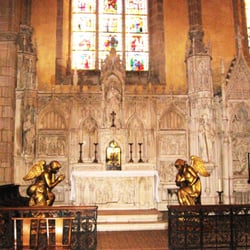
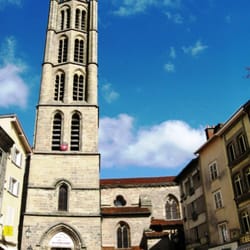
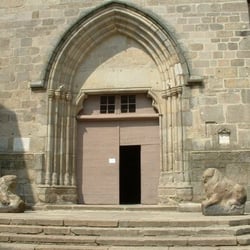
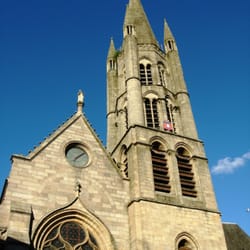
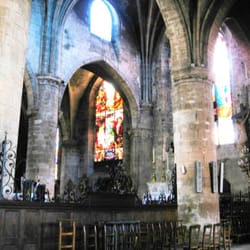
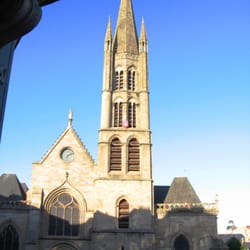
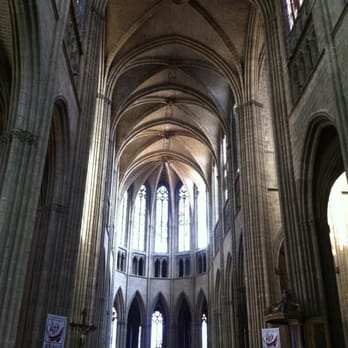
Limoges' cathedral is an imposing edifice, dominating the top of the hill on which it sits and surrounded by the remains of the ancient cathedral town. It is a beautiful Decorated Gothic structure, the exterior a mass of flying buttresses and gargoyles. Unusually, Limoges had two old centres, one around the castle (now the main centre) and the one around the cathedral. Sacked by the Black Prince in 1370 during the 100 Years' War, the cathedral town never recovered economically, and only in the last 30 years have efforts to reinvigorate it paid off. The area now has some quirky shops and a handful of bars and restaurants. The cathedral itself, although apparently stylistically uniform, has actually been built over 600 years. Begun in 1273 on the base of its Romanesque predecessor, the oldest part of the cathedral is the choir, with its ambulatory and the north transept chapel. This was originally attached to the older Romanesque nave. Work stopped in 1327 owing to a shortage of funds, and did not restart until 1378, when part of the north transept and the chapel of St Martial were begun, and the original belltower augmented with the Gothic work that we see today. The southern transept was completed shortly after. Work stopped again for most of the 100 Years' War, after which the first two spans of the nave were built between 1458 and 1499. In the early 16th century the north transept was extended with the addition of the portal of St John, but it was not until the 19th century that the final three bays of the nave were completed and the church reconnected to its tower. The tower and the portal of St John on the north transept are the most impressive external features, the latter a wonderfully flamboyant piece of late Gothic composition. The interior is best entered via the entrance under the west tower, where you pass a series of late mediaeval memorial slabs. The impressive Renassiance rood screen has been moved to the west end, and is easy to miss as you walk through it (remember to turn around as you enter). The nave and choir then form an uninterrupted space in front of you, impressive thanks to the sheer height of the nave vault, nearly 80ft high. Alas, history has not been kind to its furnishings, which are limited to some wall paintings of angels in the radiating chapels behind the chancel, small fragments of 15th century stained glass, and two Bishops' tombs; one from the late mediaeval period, and the Renaissance tomb of Bishop Jean de Langeac. Most of the remainder of the extentive wall decoration and stained glass dates from the 19th century. Practicalities The church is open for visitors from 14:30 each day, until 18:00. read more


13 years ago
Very beautiful cathedral dedicated to St Etienne (St Stephen). Surrounded by a beautiful park and a cute medieval neighborhood. To be visited and thoroughly enjoyed! read more


More info about Cathedrale saint Etienne
Place Saint Etienne
87000 Limoges
France
Directions
Hours
From the Business