Cancel

    Open app

    Search

    Brixton Windmill Photos

    Recommended Reviews - Brixton Windmill

    Your trust is our priority, so businesses can't pay to alter or remove their reviews. Learn more about reviews.
    Yelp app icon
    Browse more easily on the app
    Review Feed Illustration

    15 years ago

    Helpful 3
    Thanks 0
    Love this 4
    Oh no 0

    14 years ago

    Helpful 0
    Thanks 0
    Love this 0
    Oh no 0

    Verify this business for free

    People searched for Landmarks & Historical Buildings 565 times last month within 5 miles of this business.

    Verify this business

    Royal Victoria Patriotic Building

    Royal Victoria Patriotic Building

    5.0(1 review)
    2.1 miWandsworth Common

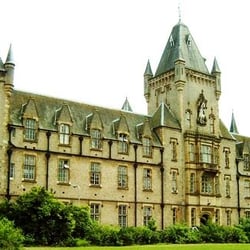
    Tucked away at the far north of Wandsworth Common, behind the Fitzhugh housing estate, is one of…read moreSouth London's most remarkable buildings: on the scale - and in the style - of a baronial castle, it has variously been a school, hospital, interrogation centre and a college, and was nearly pulled down. It is now a Grade II-star Listed Building. History The building was paid for by the Royal Victoria Patriotic Fund, established to provide for the widows and orphans of soldiers killed in the Crimean War. The building was intended as a girls' school and opened in 1859. A boys' school was built to the rear in 1872. The original building - designed by Rhode Hawkins - incorporated a number of innovative building techniques, that nearly caused its later downfall. Life for the orphans was extraordinarily hard: from pumping water to the roof cisterns to having their heads shaved to counter lice, they were assembled to be hosed down with cold water every morning in the courtyard. Scandals which involved physical and sexual abuse by staff - and the death of an orphan - nearly resulted in the institution being closed down. The innovative heating system didn't work, so conventional fireplaces were provided for the staff - but not the orphans. Things had improved somewhat by the First World War (for example, central heating had been installed), when it was used as a hospital for injured troops, who arrived at a specially-built temporary railway station close by. After the end of hostilities, it resumed life as a girls' school under 1939. During World War II, it became the London Reception Centre, used by MI5 to process non-British aliens entering the country. After the war it became a teacher training college, and then a comprehensive school, before the decaying fabric - many problems arising as a result of the techniques used to build it - forced them out. The building was sold and gradually restored by its present owners, who had to endure, among other things, a fire in the Great Hall just before it was handed over. Building works took 7 years. The building now contains flats, studios and workshops for businesses in the creative industries, a drama school and a wine bar. The building The main building is built in a Scottish Baronial Gothic style, with Gothic, Jacobean and French elements, in yellow brick with stone dressings. The main façade has an imposing central tower, with matching smaller corner towers. The plan includes two central courtyards, a separate Chapel and various outbuildings, but the main feature is the huge Great Hall, with a hammer-beam ceiling decorated with the coats of arms of towns across Britain and the Empire which contributed to the original funds. The whole edifice really is an astonishing sight, especially as it has now been surrounded on the north side by comfortable suburban housing. Practicalities There is pedestrian access from Fitzhugh Grove, but vehicular access is via Windmill Lane and John Archer Way. Unless you are visiting a business or a resident in the one of the flats, the only public access inside is to the wine bar (the restaurant in the cafe recently closed down).

    Freddie Mercury's Studio

    Freddie Mercury's Studio

    3.9(8 reviews)
    4.3 miKensington

    We walked blocks and blocks to get to this spot to see where Freddie Mercury's last residence and…read morestudio was in London. There isn't much to see but a high wall painted in anti graffiti paint. There isn't much to see or do, no tour to take - therefore it was just an okay experience for me. The highlight was the memories that sprung to mind when being in this place.

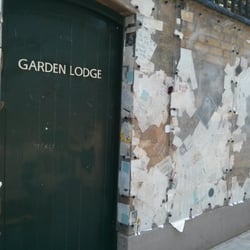
    I went to visit Freddie's final haunt more for sentiment than expecting to see some great tribute,…read moreor anything much more than a vandalised door and some bricks (as the previous Yelp pictures suggested). I was pleasantly surprised that it seems a compromise has been reached between vandalism and tribute; the bricks directly beside that famous door - now redecorated with 'Garden Lodge' printed on it - are covered in perspex but fans have slipped through letters, notes, doodles, all full of so much love. In reality, Freddie was a private man and I doubt he'd want a shrine (he objected to the place being turned into a museum, apparently) but to see the love people still hold for him nearly 25 years on is beautiful. My sentiments were fulfilled, and I respectfully left listening to 'I'm Going Slightly Mad'. Just around the corner (I kid you not) I bumped into a person dressed as a life-size can of paint. I was already wondering if 'slightly' wasn't quite appropriate for me but that just proved it - hah! Worth going for the sentiment alone, if you're sentimental like that. You won't be bowled over by what you see but more what you feel, if you're that way inclined.

    Photos
    Freddie Mercury's Studio
    Freddie Mercury's Studio - Taken December 2018. Wall is completely free of graffiti and tributes.

    Taken December 2018. Wall is completely free of graffiti and tributes.

    Freddie Mercury's Studio

    See all

    Chelsea Old Church

    Chelsea Old Church

    5.0(2 reviews)
    2.9 miChelsea

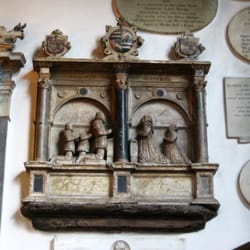
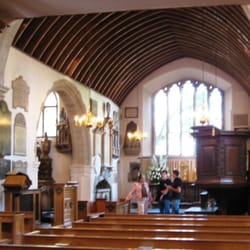
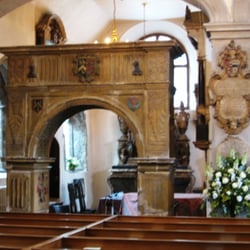
    Situated close to Chelsea Embankment, a short walk from Battersea bridge, Chelsea Old Church…read moreappears as a rather unprepossessing, modern-looking red brick building. There are some nice leafy gardens around, but from the outside it is totally unremarkable. But inside, it's a revelation: for it possesses one of London's outstanding collection of 16th and 17th century tombs and memorials. The church itself dates back to around the 13th century, although was much modified over the years, with significant additions in Tudor period and later. But all this was shattered in 1941, when the church received a direct hit from an enemy bomb, reducing most of it to its foundations. A huge effort was made to collect the remains and restore the church, and the present interior is faithful to the original mediaeval plan, and uses as much of the salvaged fabric as possible. Particularly lovely are the capitals on the More chapel, with faces and delicate relief carvings, reputedly designed by Holbein, to represent the symbols of Sir Thomas More's offices of both church and state. The tombs and memorials dominate the interior. Pride of place has to go to the monument of Sir Thomas More, on the south wall of the sanctuary. A plain perpendicular arch surmounts a marble panel with an inscription he drafted before his death, by beheading, in 1535. It commemorates his first wife and expresses the wish that he and his wife should be buried together. On the south wall, Lord Dacre (1595) and his wife lie, mediaeval style, under a huge classical canopy. Opposite, on the north wall, Lady Jane Cheyne (d 1669) looks out from under a baroque canopy, sculpted by Antonio Raggi, a collaborator of Bernini. Richard Jervoise (1563) is commorated with a huge triumphal arch (unique as a memorial in Britain) which thoroughly dominates the entrance to the Lawrence chapel. The bust of Sir Robert Stanley (1632) forms the centrepiece of another substantial Renaissance piece, just beyond. It is said his representation was one of the earliest to be modelled on his true likeness. Other memorials commemorate the Northumberlands, Brays, Hungerfords, Colvilles and Lawrences. Most poignant for me, though, is a later memorial to four young men who drowned opposite the church when their boat sank in the Thames in 1839, 'erected by a few of their intimate companions'.

    A lovely church, the internals of which were partially pieced together from the original medieval…read morechurch, which was badly damaged in WW2. Minimal parking outside. Current incumbent is a nice chap ( as is his brother, also a priest , who sometimes subs for him) .

    Photos
    Chelsea Old Church
    Chelsea Old Church
    Chelsea Old Church

    See all

    The Whitgift Almshouses Croydon - View of the North End facade - sadly a bit messy because of the tram wires!

    The Whitgift Almshouses Croydon

    5.0(2 reviews)
    5.4 miCroydon

    An astonishing survivor in central Croydon is this lovely complex of almshouses. Located right in…read morethe heart of the shopping district, and surrounded by bars and clubs, it seems oblivious of the world beyond. The building was the brainchild of Archbishop Whitgift (c. 1530-1604) who, resident in the nearby Archbishop's Palace, sought permission from Elizabeth I to build some almshouses for the poor of the parish. Begun in 1596, and built in brick with stone detailing, it survives essentially unaltered; a quadrangle of individual houses, each with their own entrance and porch, surrounds a delightful courtyard of pretty gardens. The chapel contains a memorial to Whitgift himself, and other Tudor fittings, including the original benches. There are two entrance porches, sensibly gated off, but the one at North End allows passers-by a glimpse into this secluded world. It still fulfils its original purpose, providing sheltered accommodation for the elderly. The present Queen Elizabeth described it as 'An oasis of peace and tranquility'. It's hard to disagree. ############################################# Photographs added 01-12-2007

    It's astonishing how many people must walk past the almshouses every day without giving a second…read morethought to what they are and why there are there. This beautiful building is just one of the legacies which John Whitgift left to Croydon about 500 years ago. That it still survives when so much of the town has been replaced with concrete and glass is a small miracle. Opposite the almshouses, you used to able to sit in a small raised area (dubbed locally 'pigeon s**t square' until it was demolished to make way for the tram), but now the corner is very much busier, and it is increasingly difficult to stop and take in the Tudor brickwork, the tiny windows and over-sized chimneys. If you turn your back to Primark, and claim one of the benches for 5 minutes, you might start to imagine what Croydon was like before the advent of the high street.

    Photos
    The Whitgift Almshouses Croydon - View into the garden. The present Queen Elizabeth described it as 'An oasis of peace and tranquility'. It's hard to disagree.

    See all

    View into the garden. The present Queen Elizabeth described it as 'An oasis of peace and tranquility'. It's hard to disagree.

    Holy Trinity Church

    Holy Trinity Church

    4.5(2 reviews)
    2.0 miTooting Bec, Tooting

    Holy Trinity is an Anglican church on Trinity Road close to Tooting Bec, in the parish known as…read moreUpper Tooting. It is a Grade-II listed building. The parish includes Tooting Bec station and runs down to Tooting Common in the south, straddling Balham High Road. The church was built in 1854-55, and designed by the Victorian church architect Anthony Salvin (1799-1881), who also restored a number of country houses and castles. The tower was added in 1860, and the aisles widened in 1889 and 1893. The south aisle was separated off from the rest of the church for use as a hall in 1976. The exterior is built in ragstone with Bath stone dressings, in a 14th century Decorated Gothic style. Both aisles as well as the nave and chancel have gable roofs. Although the interior is grandly proportioned and spacious, with arcades of five bays on round piers, the whitewashing rather drains it of character, and the blocking off of the south aisle unbalances what would otherwise be a really impressive space. The chancel and north chapel are rather happier architecturally, an attractive touch in the former being a pair of dormer windows. Decorations are modest, but most notable are the Pre-Raphaelite style wall paintings of St Agnes (in the north chapel) and St Oswald (on the west wall) and on the tower walls around the font, painted 1906-13 by Richard Castle. There is also some attractive Victorian stained glass. The church is happily open during the week for visits and for private prayer: a rarity these days in urban London. This should be applauded. The church is the centre of a busy parish life and has a Sunday school.

    good image in the local communityread more

    Brixton Windmill - landmarks - Updated May 2026

    Loading...
    Loading...
    Loading...