Cancel

    Open app

    Search

    British Engineerium

    5.0 (1 review)

    British Engineerium Photos

    Recommended Reviews - British Engineerium

    Your trust is our priority, so businesses can't pay to alter or remove their reviews. Learn more about reviews.
    Yelp app icon
    Browse more easily on the app
    Review Feed Illustration

    14 years ago

    Helpful 0
    Thanks 0
    Love this 0
    Oh no 0

    Verify this business for free

    Get access to customer & competitor insights.

    Verify this business

    Hove Museum & Art Gallery

    Hove Museum & Art Gallery

    4.7(6 reviews)
    1.1 mi

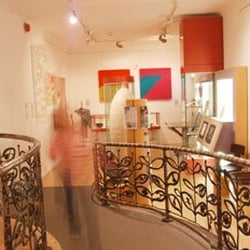
    Hove museum and art gallery is small, but perfectly formed…read more It's not somewhere you'd make a beeline for, unless there was something of specific interest to you personally to see, but it can provide a pleasant enough distraction for an hour or so on a rainy day. It has recently been refurbished and upgraded to provide high quality temporary exhibition space. The museum is housed in one of Hove's grandest former mansions, a large Italianate house just to the west of the shopping area, half a mile from St Andrew's old church on Church Road. The highlight of the permanent collections is actually outside the museum: the Jaipur Gate. This was made for the Colonial and Indian Exhibition of 1886 held in South Kensington, and moved here in 1926. It was paid for by the Maharaja of Jaipur, whose motto is inscribed on the front, in English, Sanskrit and Latin: 'where virtue is, there is victory'. It was carved by Indian craftsmen, although its design was concieved by two Englishment, and it combines both Mughal and Rajput elements. After recent conservation work, it is now in excellent condition. Inside, the ground floor provides two temporary exhibition spaces, a small shop and a tea room, which seemed very popular on my visit, and is probably worth knowing about in its own right. Upstairs are the four main areas of the permanent collection. Most important of these is the collection of early film and cinematic equipment. Brighton and Hove were important in early British film making, and a small film industry was based at Shoreham Beach in the days of silent films. The collection includes a wide selection of early film-making and projection equipment, and a small 8-seat 'cinema' where excerpts from early films and items for children are shown. The art gallery contains a handful of attractive works by European (mostly British) artists, although none are in the 'top flight' of European painting. Details of the collection are on the website (note that this covers Brighton's collection, too, which is wider ranging and more impressive). Next comes a small display of local history, which includes a small number of objects from local excavations from the bronze age to the mediaeval period, and includes the skull of a Saxon woman, important amber Bronze-age grave goods, items from a Saxon warrior burial, and pottery from a Roman villa excavated in nearby Southwick. Finally, there a lovely toy collection, displayed in an area especially designed for children, which seems very well done -the collection covers quite a wide range from the 18th to the present. The temporary collections cover local arts and crafts and, as ever with this kind of display, the quality varies a bit, although the presentation is excellently done. The shop sells cards, postcards and toys as well as small souvenir items. Entrance is free.

    Whether you're visiting to see the museum's fascinating exhibits or tp sample the quaint delights…read moreof it's small but charming tea rooms you're sure to be satisfied by Hove Museum and Art gallery. I went a few months ago during a bike ride with the simple intention of grabbing a tea before heading home. Not only did I extend my order to include a slice of carrot cake and a scone but I had to take a trip round their free exhibitions including a fascinating collection of photos and extracts from Brighton's Herald Newspaper during Word War II. This is open until Jan 10th 2010 so head down soon. Of you're reading this after that date then I would imagine they've set up an equally interesting exhibition by now, as Brighton & Hove council seem to be quite skilled in such areas. If you've lived in Brighton for a while and not yet visited then you're missing out on a very educational and cost-effective excursion. I'd happily go again just for the cream tea and scones!

    Photos
    Hove Museum & Art Gallery - Photo from http://www.brighton-hove-rpml.org.uk/Museums/hovemuseum/Pages/home.aspx

    Photo from http://www.brighton-hove-rpml.org.uk/Museums/hovemuseum/Pages/home.aspx

    Hove Museum & Art Gallery
    Hove Museum & Art Gallery

    See all

    Penny Arcade Museum

    Penny Arcade Museum

    4.0(2 reviews)
    1.8 mi

    A must for anyone interested in old fairgrounds and amusement arcades, Brighton's Penny Arcade…read moreMuseum is a small arcade housed in one of the arches on the sea-front. A few minutes walk from Brighton Pier, it's also a great place to take kids for half an hour's fun. There's funny mirrors that make you look taller, shorter and fatter and over 50 vintage penny slot machines. Since most of the machines were manufactured between 1895-1950 some of them seem to break down occasionally but most of them are in good working order. There's strength machines that test your endurance, fortune tellers that predict your future and love life and quirky machines like What The Butler Saw. For £1 you get 7 old pennies to play whatever machines you like. The arcade is open every day from 12am-6pm Easter til September and fine weekends in the winter. If you're planning to make a special trip, it's worth phoning to check.

    This is a great break from beachlife and a true homage to the path that laid the way for xboxes and…read moreplaystations. Set in the King's Road arches and slap between the piers, you will find the museum. Inside are a wide range of truely oldschool arcades and eccentricities from the late Victorian era to the mid Twentieth Century. I especially find the 'What the Butler Saw' machines funny. I also like that they give you large old pennies to play, rather than have converted the machines to take contemporary currency. I'm sure a number of these end up leaving the arcade as souveniers, so I suppose they have them made to order or something! You are unlikely to find all the machines working at any one time, but there will certainly be at least £2-£3's worth of pennies to play with. The only thing I missed not being present was an old style automated organ or some 'traditional' snacks to buy. Certainly a fun way to spend a few quid doing something a little different.

    The Brunswick Estate - Lansdowne Place

    The Brunswick Estate

    5.0(1 review)
    1.6 mi

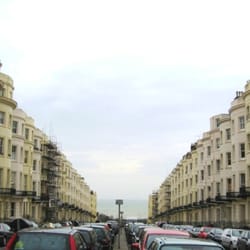
    The Brunswick Estate - comprising Brunswick Square, Brunswick Terrace and Brunswick Place, and the…read moreimmediately surrounding streets, is one of the finest set-pieces of Regency architecture in Britain. This huge development came about largely through just two men: the landowner, the Reverend Thomas Scutt, and the ambitious young architect Charles Augustin Busby. The estate was built largely as a speculative development, reaping the rewards of the European peace of 1815, which had revived the economy and led especially to investment in property. Busby's plans for the new estate were not just about houses; he planned a complete Regency town, with different types of housing for different social classes, a church, market hall, town hall, two pubs (separate ones for the workers and the gentry, naturally) and public baths. It even had its own police and fire service. Busby set out the design and specifications for the individual houses, including the building materials to be used, and it was then for the speculators to complete their construction. As well as its location close to the sea, it was close to the iron-rich springs in what is now St Ann's Well Gardens, which became a small but fashionable Spa. The main streets were named in honour of Caroline of Brunswick, wife of the Prince Regent, (later George IV). As the landowner, Scutt's role was largely passive, since he stood to profit only from the sale of leases. But he cooperated with Busby in releasing the land in packets as required, helping to make the whole venture a great success. Built between 1826 and 1840, it helped Hove to develop as a fashionable counter-point to Brighton, being close enough for its inhabitants to enjoy its pleasures, while living in quieter and more select surroundings, which were then largely rural. This undoubtedly helped start the social rivalry between Brighton and Hove! Many were second home owners from London - starting another trend still evident today. The architecture comprises three main set-pieces. The estate is centred on Brunswick Square, which runs from Western Road as a short avenue before broadening out into a rectangular square, the centre of which forms a small public park with flower beds, trees and lawns. On the sea front, it is flanked on either side by Brunswick Terrace, which has been extended on the west beyond the original symmetrical form, but in a sympathetic style. Brunswick Place, north of Western Road, was just outside the original estate, and added later in the same style. Many of the houses have distinct rounded façades, with the terraces often grouped either side of a row of more formally classical designs, incorporating Corinithian and Ionic columns and pilasters. Shell and ammonite decoration is also used throughout. The western extension of Brunswick Terrace is more severe in its classical style, but still impressive. Many of the houses have balconies with cast-iron balustrades and all have matching cast-iron railings at street level. Over the years, the houses have mostly been redeveloped into flats, many of which became run down. To preserve the architectural unity in 1976 an Act of Parliament was passed, which requires the owners to paint the houses every 5 years, and specifies the exact paint which they are to use! The warm, yellow colour is officially known as 'Hove Cream'. One of the houses in Brunswick Square is now a museum: The Regency Town House is a grade 1 Listed terraced home of the mid-1820s, and is being developed as a heritage centre and museum to focus on the architecture and social history of Brighton & Hove between the 1780s and 1840s. (Advanced booking is required.) Despite this, the interiors of many of the buildings are rather shabby, reflecting the difficulty of maintaining such buildings in good order. Another modern problem is the need for parking, and the streets are rather overwhelmed with parked cars (the UK having not yet adopted the rather clever continental practice of building underground car parks). Nevertheless, this remains one of the most impressive pieces of early 19th century architecture in Britain.


    Photos
    The Brunswick Estate - The more severe classicism of the western extension of Brunswick Terrace

    The more severe classicism of the western extension of Brunswick Terrace

    The Brunswick Estate - Brunswick Terrace - western arm

    Brunswick Terrace - western arm

    The Brunswick Estate - Brunswick Place

    See all

    Brunswick Place

    The Royal Pavilion - The Music Room is just lovely and has a tragic history.

    The Royal Pavilion

    4.3(68 reviews)
    2.3 mi

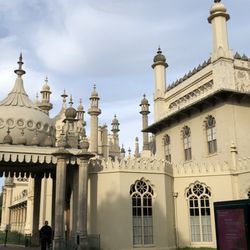
    The Royal Pavilion is a MUST SEE in Brighton. This eccentric and extraordinarily unique former…read moreroyal residence stands out for its captivating and unexpected architectural style, which blends Victorian grandeur with the exotic influences of Indian and Chinese design...for some odd reason King George IV, Prince of Wales, was fascinating by all things Chinese and Asian cultures...the interior is full of Asian design influences with art, decor, architecture, statues, fabrics, and just about everything. So colorful, so unbelievable, so lavish, and so sad for the average British citizen having to pay for all this outlandish extravagance for the rich and wealthy Royalty...at least us modern folks get to enjoy it at the expense of their suffering for a rather pricy £20 entry fee.

    This is a historical landmark and "must-see" sight in Brighton for visitors. It was the vision of…read moreKing George IV (when he was prince-regent) to create a Western interpretation of themes from India and China. Be sure to give yourself 1-2 hours to tour the rooms. I would strongly recommend the audio guide handset (it's worth the extra pound). If you're in Brighton for a conference, they'll give you a 10%-20% discount if you show your lanyard. Otherwise, the adult price of admission gives you free access up to a year (so you can visit a second day if you run out time). Lots of pluses - the opulent decorations are visually stunning and a bit fun and whimsical. The painful relationship between George IV and Caroline was quite sad to read. It was also interesting to learn that Victoria was a niece of George IV and his brother William did not have any legitimate heirs. The audio tour provides a lot of background context - and in my opinion, helps to fill in many details of the Royal Pavilion Tour. The music room is stunning - but also tragic given the arsonist and the damage from a minaret which collapsed and fell through the roof. At the end, there's a gift shop where you can pick up a tea towel and a coffee shop which also has iced tea and gelato. The town of Brighton now operates the Royal Pavilion - so your funds help to support the town. Enjoy!

    Photos
    The Royal Pavilion - The Saloon was made into a more formal regal room.

    The Saloon was made into a more formal regal room.

    The Royal Pavilion - Stairwell has a Chinese theme.

    Stairwell has a Chinese theme.

    The Royal Pavilion - Exterior has a Mughal empire (India) theme.

    See all

    Exterior has a Mughal empire (India) theme.

    Brighton Toy & Model Museum - courtesy of museum website

    Brighton Toy & Model Museum

    3.7(11 reviews)
    1.9 mi

    The location of this museum couldn't be more appropriate...as you enter the little door way from…read moreunder the the railway bridge, you feel as if you've opened a children's toy chest and walked right in! Whether toys are your thing or not, you won't be able to resist a pang of nostalgia as you look back at a hundred years of toy-making history. If you're too young to get excited by memories of toy train sets and wooden puppets, this is probably a perfect place to take your parents! And even if you don't remember the toys on display yourself, some of them are just plain amazing to look at- toy theatres and old-fashioned arcade games are among my favourite items on display. I'm no toy fanatic, but I like this place...it's really interesting to see how toy-making practices have evolved over the years. The central location and smaller size of the museum makes it a great place to pop into for a mini history lesson, when you've got a spare 10 minutes or an idle afternoon of wandering the Lanes. It also means you wont get museum fatigue!

    Tucked away in one of the arches under Brighton's splendid Victorian railway station is this small,…read morebut perfectly formed, museum, housing the UK's foremost collection of toys and models. Centrepiece of the more than 10,000 items in its catalogue is a rare 'O' guage model railway layout, which runs at selected times (see web-site). But there are also substantial displays of puppets, dolls, tin-plate boats and buses, and dioramas of toy farms and military re-enactments. Many of the items are very rare, and the museum acts as a centre of expertise on such toys for the likes of Christie's auctioneers. The museum has a substantial education programme for children, and hosts visits by schools as well as individuals and families. As you'd expect, it's an excellent place to bring children, and the museum's web-site focuses very much on their needs. There's also a small shop to provide temptation afterwards! The museum also lays on events from time to time - see web-site for details. The museum can be a little difficult to find: emerging from the station, leave the entrance portico on the right hand side (by Marks & Spencer's), and Trafalgar Street is the road which descends steeply under the station's forecourt - the museum is actually underneath. Public transport (train and bus) is excellent, but car parking is a bit more tricky: however, there's an NCP car park a few blocks away.

    Photos
    Brighton Toy & Model Museum - Boom boom!

    Boom boom!

    Brighton Toy & Model Museum
    Brighton Toy & Model Museum

    See all

    Fabrica

    Fabrica

    4.4(5 reviews)
    2.1 mi
    £

    As well as artwork and exhibitions, Fabrica is also an amazing venue to hire out for Weddings,…read morecivil ceremonies, conferences and launch nights. My brother was married here 2 years ago, and Fabrica as a venue was absolutely top notch. From the outside, it is a beautiful old church situated right in the South Laines, which could look as though services are still taking place. Once inside, the venue's space is one massive room with a striking viewing gallery, which give it so much potential to make into something beautiful. My brother and his wife had ivy leaves and lights draped across the viewing gallery, giving the wedding an old fashioned Pagan feeling, which inside an old church was truly unique. The events people from Fabrica were really well organised and truly interested and concerned in the look and feel of the wedding, which thankfully went incredibly well, due in large part to the atmosphere created by the beauty of the venue itself.

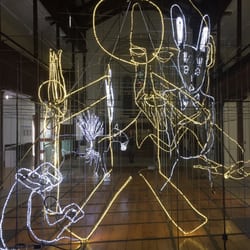
    Established thirteen years ago, Fabrica are a visual arts organisation that support and promote…read morecontemporary artists. Their home on Duke Street is an incredible Regency church with high ceilings and ornate windows. The main space is used as a gallery with free regular installations and exhibitions whilst the smaller spaces on the ground and first floor are used for meetings, one to one mentoring with staff and workshops. Painters, sculptors and visual artists should note they have a terrific Artist Resource Library where you can find upto date lists of national and international galleries, information about available grants and arts funding and lots of current art magazines and quarterlies. The art itself is also pretty inspiring. I saw the Amish Kapoor installation as part of the Brighton Festival earlier this year and was both freaked out and blown away. Which is probably how he'd want people to feel given the subject matter and scale of the work!

    Photos
    Fabrica - Picture courtesy of Fabrica Website

    Picture courtesy of Fabrica Website

    Fabrica - Picture courtesy of Fabrica Website

    Picture courtesy of Fabrica Website

    Fabrica

    See all

    Marlipins Museum

    Marlipins Museum

    3.3(3 reviews)
    4.4 mi

    This is a small, local museum in the centre of the historic fishing town of Shoreham-by-Sea…read more Although Shoreham can feel these days more like a suburb of Brighton, it was by far the more important town for most of recorded history, being an important port from Saxon times, and probably before. Marlipins Museum is housed in a charming old building, dating from the 12th ans 13th centuries. It's one of the oldest secular buildings in Sussex, with a facade decorated with an attractive chequerboard design of Caen stone and flints. Oddly, the Museum's strange name isn't explained anywhere. The museum traces Shoreham's history as a trading town and fishing port from the 11th century onwards, and much of the small collection focuses on ships and shipping, with a fine series of watercolour and oil paintings of the harbour and various ships, and various bits of shipping paraphernalia. But the museum records much else besides: Shoreham was the departure point from which the future Charles II escaped after the English Civil War, and it played a key role in the defences of the South Coast until recent times - the remains of a 19th fort are still visible on the shoreline, as are the more scant remains of the World War II anti-aircraft radar station situated here. Shoreham was also - incredibly - a major centre of the early British film industry, and over a dozen films were made in Shoreham studios in the silent film era. This attracted a suitably bohemian set of actors and hangers on, who established the 'bungalow town' on Shoreham beach. And, of course, Shoreham's famous and beautiful art deco airport was the UK's first licensed airport, still in regular use. But the strangest story belongs to the building itself: recent excavations found an unexplained pit under the oldest part of the building, in which was buried the skeleton of a cat. Further digging uncovered the remain of a another three cats. Theories for these strange burials range from the ancient practice of burying cats to bring good luck, to the more prosaic idea that in mediaeval times the building housed a furrier manufacturer. One of the skeletons makes for a grisly display. The museum is small enough to keep the attention of children as you go around, and is fully accessible for wheelchairs, thanks to the lift in a small modern extension.

    Marlipins Museum, on the Shoreham High Street (right next to the Marlipins Pub) is a brilliant…read morecombination of old and new, with one of the oldest lay buildings in Sussex linked to a modern two-storey building in a really tasteful manner. The displays are permanently running and mainly concentrate on Shoreham's maritime history and that of the River Adur. Also, which is a little known fact, Shoreham was once the hub for the UK's silent movie industry! They offer a popular Monday coffee morning so its the perfect place to head after a nice walk around Shoreham to find out some of the area's fascinating history.

    Photos
    Marlipins Museum

    See all

    British Engineerium - museums - Updated May 2026

    Loading...
    Loading...
    Loading...