Cancel

Open app

Search

Biscayne Historical Marker

5.0 (1 review)

Biscayne Historical Marker Photos

Recommended Reviews - Biscayne Historical Marker

Your trust is our priority, so businesses can't pay to alter or remove their reviews. Learn more about reviews.
Yelp app icon
Browse more easily on the app
Review Feed Illustration
Photo of Ariel W.
4398
5931
104193

2 years ago

Helpful 24
Thanks 4
Love this 29
Oh no 0

Verify this business for free

People searched for Landmarks & Historical Buildings 1,009 times last month within 5 miles of this business.

Verify this business

Sherwood Forest Indian Park

Sherwood Forest Indian Park

5.0(2 reviews)
1.4 mi

Sherwood Forest Indian Park is a small park located in the charming El Portal neighborhood of…read moreMiami. El Portal means the gate in Spanish. At one time there was two huge wooden gates at the entrance to the village on Northeast Second Avenue but they were taken down in the 1940s. El Portal was annexed into the City of Miami in 1925 but with the arrival of the Great Depression, Miami gave it up its jurisdiction and El Portal was incorporated as its own village in 1937. Sherwood Forest refers to one of three divisions form the Village of El Portal along with El Jardines, and El Portal. In the Sherwood Forest subdivision is the Sherwood Forest Indian Park that lies a block west of an ancient Indian burial mound. An elevated circle is thought to be a burial mound for seventh-century Tequesta Indians. This Miami-Dade County Historic Site was believed to have once been the center of Tequesta life. The Tequesta who had lived in the area for thousands of years were wiped out by slavery and disease when the Spanish came to Florida in the 1500's. In the 1920's the mound was declared a historic site, the first such archeological discovery in the area to be protected with that designation. Today El Portal is known as a bird sanctuary and you can expect to find peacocks on the streets. If you come to the park you wont see much. There is a small trail, fountain, and benches. There isn't even a parking lot. The real worth of the land is in it's connection to a Pre-Columbian civilization.

This is a really cute gem of an area, one way traffic, small roads, hidden away and is basically a…read moretree lined secret residential area. I will surely be back at some point to investigate this new found area of mine.Sherwood Forest Indian park is smack bang in the middle of this secret place Here is what I found out about it once iI was home, after being intrigued about it. The Village of El Portal is a secluded, modern Garden of Eden that encompasses barely a square mile. It was incorporated on December 6, 1937, A.D. at the residence of H. H. Filer. There were 25 homes that were included in this incorporation of El Portal. The Village was incorporated by 34 out of 41 votes. Mr. W.O. Robertson was appointed Mayor. The members of the Women's Club, formed by Dr. J. McCormick, was very active. They did many public affairs and administrative functions for the council who often were their husbands. Three divisions united to form the Village of El Portal: Sherwood Forest, El Jardines, and El Portal. Sherwood Forest --a section of El Portal that possesses the most naturally pleasing 75-foot tall oak trees, manatees, and exotic birds and reptiles. The initial vision of El Portal was to make it similar to Coral Gables. The Sherwood Forest House borrows its name from the surrounding subdivision developed by D.C. Clarke during the 1920's land boom. The Mound is known for the cave. It is debatable as to who built the cave. Some say the French Huguenots, some say the Tequesta Indians and others say a natural phenomenon. The cave had many uses during the years, including providing a cool place to sit during the summer days. The Indian Mound is one of the highest points in Miami-Dade and its history dates back to the year 600 when ancient Tequesta Indians migrated and settled at the Mound while passing by on the Little River. The Mound was one of the few areas above Water. It was actually six to eight feet higher than it is presently. Miami-Dade County declared the Indian Mound a historic landmark in the 1920s. It was the first such archeological site to carry this honor in the County. El Portal is a Bird Sanctuary. The many trees provide a large canopy that the birds enjoy. Many exotic bird species have been sighted including the peacocks that may be seen on any given day. The Radar Memorial United Methodist Church is located on 87th Street and NE Second Avenue. It was formed in 1923. It is one of the oldest churches in Miami-Dade County. An Arch, known as: "the gate," may have stood at 85th Street and NE Second Avenue. It was made out of wire and wood and had two Robin Hood type figures on each side. The oldest home in El Portal is truly a formidable sight to behold. It was moved from its original location off of Biscayne Boulevard in 1910. This house had several uses over the years from entertaining to acting once as a medical clinic back in the 1930s. Trailblazers in El PortalClerow "Flip" Wilson was a well-known comedian and actor. Mr. Wilson became famous while serving in the United States Air Force. He was asked to tour military bases to cheer up other servicemen. His barrack mates gave him the nickname "Flip" stating that he was always "flipped out". Garth Reeves was the owner of the newspaper The Miami Times. His home was always known for its beautiful landscaping. Betty Wright is a soul and R&B singer. Her mother: Rose, her sister Jeanette and brother Phillip are longtime residents of El Portal. The part of Ms. Betty Wright's song that mentions her mom saying, "I know that you're not going to sing that song" ("Tonight is the Night") occurred while Ms. Betty Wright was at home in El Portal. Recent History In December 2002, the Village of El Portal voted to change from a council form of government to a Council-Manager form of government. On January 28, 2003, the Village Council voted unanimously to appoint Newall Daughtrey as its first Village Interim Manager.The beautiful Village of El Portal values nature and takes pride in being diverse and peaceful. As we move forward, in the 21st century, we're preparing to face the challenges of a small village and at the same time remain connected to our past and true to the values that make El Portal--"The Gate".

Photos
Sherwood Forest Indian Park

See all

Villa Vecchia

Villa Vecchia

5.0(1 review)
4.0 mi

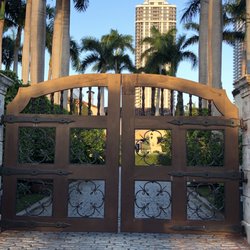
Villa Vecchia means old villa in Italian. This historic mansion was built by architect L.M…read more Barrettduring during Florida's land boom years in 1928 as a winter residence for Byron De Witt Miller. Esq, the President of F.W. Woolworth Company. Villa Vecchia is located on millionaire's row on Pinetree Drive in Miami Beach. The nearly 2 acre property is on the widest part of the Indian Creek Waterway. There is a waterfront dock that can accommodate a 100 foot yacht. The main house is 18,000 square feet with 13 bedrooms including a Marie Antionette Bedroom and a Napoleon Bedroom. The grand master suite overlooks Indian Creek. The 150-guest grand ballroom inspired by Versailles has hosted many famous world leaders including Benjamin Netanyahu, Dr. Henry Kissinger, Margaret Thatcher, Mikhail Gorbachev, and President Bill Clinton and luxury designers Emilio Pucci, Zuhair Murad, David Yurman, Luca Orlandi of Luca Luca. The ballroom is an exact replica, only smaller in size, of the ballroom at Mar-a-Lago in Palm Beach. Other notable features of the house include a mahogany paneled library, a formal dining room with 18th century furniture and a fireplace, servants quarters, a six car garage, a gentleman's all wooden library, and a gourmet kitchen with high-end appliances and stone floors. The home has been fully restored with custom crown molding, chandeliers, archways, wide windows, murals and terrazzo and hardwood floors. Also on the property is a two-bedroom guest house with a living room and kitchen, and a detached gym with steam room. The mansion has been used in the film Iron Man III and in Telemundo telenovelas. It was listed for 20 million dollars in 2012 and last sold for 15 million in 2019. It is currently off the market but there are many pictures of the interior online and you can get a quick peek through the massive mahogany gate.

Photos
Villa Vecchia
Villa Vecchia
Villa Vecchia

See all

The Coppertone Girl Sign

The Coppertone Girl Sign

4.8(4 reviews)
1.7 mi•Little River

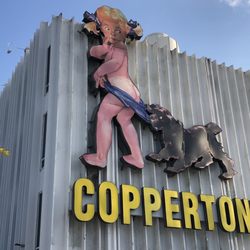
I am a fan of different architectural styles and there is a one mile stretch of mid century modern…read morearchitecture in Miami that is a gem. In the 1950's this area along Biscayne Boulevard from 54th to 77th streets was lined with motels in mid-20th-century architecture. as the years went by the area developed a reputation for drugs and prostitution and was generally avoided. Now it has been revitalized by developers and locals who are also in love with the iconic Miami Modern style. Today you will find boutiques, restaurants, Art Deco motels and a 35-foot Coppertone Girl sign displayed on the north side of 7300 Biscayne Boulevard. First a little history on how the sign came to be. Coppertone was invented by pharmacist Benjamin Green, who emigrated from Slovakia to Cleveland in 1904. He settled in Coconut Grove in 1943. In search of a cream to create the perfect tan, he cooked the first formula on his stove and experimented on his own bald head. He sold the results to a Miami Beach pharmacy. In 1950, investors purchased the company. The original Coppertone logo was considered offensive because it was the profile of an Indian chief, with the slogan "Don't Be A Paleface." Obviously it was not acceptable so the Taly Embry agency was hired to come up with a new ad campaign and logo. In 1953 they debuted the design of the little girl and a dog. It is said the inspiration came from Deborah Martin, granddaughter of early Coppertone owner Charles E. Clowe. It was Clowe's wife Sophia who noticed that Deborah Martin's training pants had slipped poolside exposing her tan line. Sophia felt an image of a little girl would be more family friendly than sexy bikini girls. Artist Larry Moore drew most of the original sign layouts. In 1957 the company was sold to Schering-Plough in 1957. who designed the national Coppertone Girl ad campaign. After the original designs were lost in a fire, Joyce Ballantyne Brand recreated the Coppertone Girl artwork using her daughter Cheri as the model in 1959. There were several Coppertone Girls signs in Miami but the 1959 three story sign was installed on the Parkleigh building at 530 Biscayne Boulevard. The sign is 33 feet high by 29 feet wide. In 1992 it was damaged by Hurricane Andrew and the building was demolished. The Dade Heritage Trust saved the sign and it was moved around. In 2008 it was installed at its current location when Dade Heritage Trust donated the sign to the MiMo Biscayne Association. Schering-Plough, donated $100,000 to the restoration of the sign by Norberto De La Rosa, one of Florida's best sign manufacturers. It was installed by Tropical Signs of Florida. In 2017 the little girl on the sign lost her head during Hurricane Irma. It was too badly damaged to be repaired so the MiMo Biscayne Association, as the the caretaker of the sign paid for a new one. The repair was made by Jerry Bengis, whose father built it in 1959, and art director Liessel Ferrer, of Hialeah-based Neon Sign Solutions. I love that this piece of local flavor and Miami history was saved and restored. You can imagine yourself back in the 1950's as you cruise this neighborhood and sail past the sign. If you are a fan of midcentury modern design you will want to tour this Miami neighborhood and pay a visit to the iconic Coppertone girl.

The Coppertone Girl Is an iconic symbol in Miami - she has been moved a few times, but at present…read moreshe resides in the Mimo area, literally opposite the Historical Vagabond Motel. Here is some info I found out about her on the internet - The iconic "Coppertone Cutie," a fixture in the city since 1959, has "fully recovered from her Hurricane Irma injuries and is safely back home at 7300 Biscayne Boulevard." After Hurricane Irma battered the sign in September, the historic preservation association sent out a call for help to find a missing piece that had snapped off her head during the storm. Turns out the non-profit didn't have to look too far to find the Coppertone Cutie's head. It was there all along. The piece was found lodged behind the sign, which otherwise withstood Irma's winds. But that bit of her blond head was hidden from view. Alas, that original piece was damaged beyond repair, the group said. A temporary patch only revealed that even more extensive repair work was required to restore a look that dates back to a 1953 sketch by an art director at the Coral Gables advertising agency, Tally Embry. According to MiMo, Jerry Bengis, who has a lifelong association with the Coppertone Girl - his father's sign company created the 35-foot sign in 1959 - called in Neon Sign Solutions to restore her face. The sign company, with art director Liessel Ferrer, gave her a much-needed face-lift by eliminating a former unattractive seam beneath her nose. The sign unveiled on Monday is now "all of a piece," MiMo said, and she's back at the location from which she's greeted drivers and pedestrians along Biscayne since her move there in 2008. The sign, formerly part of the "Tan don't burn" suntan lotion ad on a downtown Miami building, now has a historic designation. "The MiMo Biscayne Association is deeply relieved to have been able to save this beloved sign from becoming a victim of Irma's destruction," Stander said. "We are hoping - though it's a long shot - that the panel will turn up in someone's backyard and will miraculously be identified and returned," MiMo Biscayne Association president Debby Stander told the Miami Herald in September.

Photos
The Coppertone Girl Sign

See all

Historic Spanish Village

Historic Spanish Village

5.0(1 review)
5.9 mi

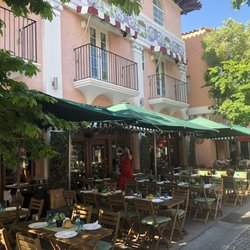
Nestled in the heart of South Beach is a street filled with European charm. The idea of a Spanish…read moreVillage was conceived by NBT Romney and William Whitman in 1925. It's a two block corridor between Washington and Pennsylvania Avenues designed to look like the Mediterranean villages of Spain and France. In the 1920's Espanola Way was where the wealthy went to dine and dance. It was also a gathering place for the gangsters of the time. Al Capone used known to have used the Clay hotel for gambling. By the 1970's Espanola Way had become dilapidated like all of the South Beach Art Deco district surrounding it. In the 1980's Linda Polanski purchased the south side of Espanola Way. Her restoration efforts of the area along with the Clay Hotel attracted the attention of the producer of the T.V. show Miami Vice who filmed 12 episodes of the show on Espanola Way, including the first and last. Music videos, advertisements, and movies like the Bird Cage would go on to be filmed there. Today Espanola Way is lined with restaurant with outdoor seating, art galleries, and shops. Popular restaurants include Havana 1957 serving Cuban cuisine and Mare Mio Restaurant, an Italian eatery. As you walk down the street the waiters and hostesses call out aggressively for your business. Hey lady, come back! With so many choices it was a bit overwhelming. We were also looking for a Happy Hour with food, not just drink specials. In retrospect we should have just ordered some small plates. With everyone pushing so hard to get your attention it was hard to look over the menus. I fell in love with the street and plan to go back when it's cooler and I can study the restaurants a bit online. The main problem with this area is the lack of parking. We were able to snag a spot in summer in late afternoon. That is not the case on the weekends and I am sure not when it is in season. It will be worth the extra effort to come though as this a very unique and charming area of Miami.

Photos
Historic Spanish Village

See all

Muhammad Ali's House - House?

Muhammad Ali's House

3.3(3 reviews)
4.6 mi•Liberty City

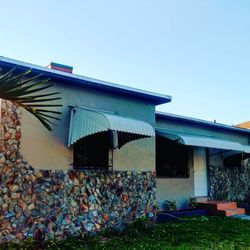
Muhammad Ali helped make Miami and Miami helped make him. He came to the area after winning gold at…read morethe 1960 Rome Olympics. Back then he was known as Cassius Marcellus Clay Jr. During his time on south Florida, he lived in many of Miami's neighborhoods, including historic Overtown. It was the end of segregation and the beginning of an integrated society. Ali would eat at Wolfie's, an iconic, 24-hour delicatessen that stood for 60 years at 21st Street and Collins Avenue and he trained at the famous Fifth Street Gym in Miami Beach. All of the greats from the 50's to the 80's worked out there including Roberto Durán, Sugar Ray Leonard, Sugar Ray Robinson. Even all these years later, interest in Muhammed Ali's time in Miami has not waned. Last year Ali was the subject of a photo exhibit at the HistoryMiami Museum. Most of the exhibit showcased him going about his daily life in the ramp up his first fight against Joe Frazier which was dubbed the "The Fight of the Century." Last years film One Night in Miami is a fictionalized account of a February 1964 meeting between Malcolm X, Muhammad Ali, Jim Brown, and Sam Cooke in a room at the Hampton House, after Ali's surprise title win over Sonny Liston. Ali won the heavyweight title from Sonny Liston at the Miami Beach Convention Center. Muhammed Ali lived in a modest home on the corner of NW 46 Street and 15 Court in the Allapattah neighborhood of Miami. While Ali lived there he had a young neighbor named Nelson Adams who idolized him. Ali kept in touch with Adams throughout his life and inspired by his hero, Adams grew up to be a doctor. Adams used to watch boxing movies outside with his celebrated neighbor. Ali returned to his old home for a visit in 2001 to relive a few memories with the current owners, the Ross family. Muhammed Ali passed away in 2016 at the age of 74. "Float like a butterfly, sting like a bee. The hands can't hit what the eyes can't see." No boxer was greater than Muhammad Ali. What a neat piece of Miami history.

This is the Former home of Muhammad Ali in Miami. He had a house in Miami's Allapattah…read moreneighbourhood. The modest home is at the corner of NW 46 Street and 15 Court. "It kind of hurt me when I heard about it," said current resident Kevin Ross about the champ's death. Ross has lived his entire life in Ali's home. Ross's parents bought the house from Ali in 1965. His father moved quickly to seal the deal. "Growing up, it was a big experience for me because everyone knew he stayed here," Ross told CBS4 Reporter Donna Rapado. "I had a lot of neighbours around here who lived here when he actually lived here. My friends all knew. So it was like a celebrity-type feeling."

Photos
Muhammad Ali's House

See all

Biscayne House of Refuge - 2/25/2026

Biscayne House of Refuge

4.0(2 reviews)
3.2 mi

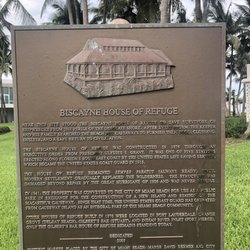
The Houses of Refuge were federally operated life saving stations that were built on the beach so…read morethat the keeper could rescue ship wreck victims during a time period when the main form of travel and hauling goods was by ship. The houses were spread along Florida's coast and were often very isolated. The Orange Grove House of Refuge was the last place barefoot mailman Ed Hamilton spent the night before he disappeared forever into the Hillsboro inlet. What exactly happened to him is a mystery that has never been solved. The House at Gilbert's Bar in Stuart was one of ten built on the coast of Florida and the only one to remain in existence. The Biscayne House of refuge was founded in 1876. William Fulford, a ship captain received an appointment to become the keeper of the house. There weren't any ship wrecks to contend with so he along with his wife hosted guests at the house and it became a hotel of sorts. The House of Refuge became in effect, the first hotel in Miami Beach. Ten miles from the House of Refuge Fulford spotted a ridge of land that he wanted to homestead. He was eventually granted 160 acres of land. 30 years later the land was the town of Fulford which then became Fulford by the Sea. In 1927, the name of the town was changed to North Miami Beach. The Biscayne House of Refuge was damaged beyond repair by the Hurricane of 1926. In 1941 the land was turned into a park. Where the Biscayne House one stood a marker resides commemorating it's existence.

There's not much to see here. It's just the historical marker. But it's such a part of Florida's…read morehistory, that if you're in the area, you should take the time to stop and read it. You can park on the street across the way and walk over. I'm familiar with the Houses of Refuge because of the one that had been located in Fort Lauderdale (Birch State Park then later near Bahia Mar). But I didn't realize there were 4 others -- in Delray, Stuart, Ft Pierce and this Biscayne one in Miami-Dade County. In 1876, President Grant ordered that these houses should be built along the SE coast of Florida. It was erected by a group that would later become the US Coast Guard. Florida's southeast was a pretty desolate area then. The idea was to look out for sailors and survivors of shipwrecks after storms. It remained at this location where it stood until it was damaged by a hurricane in 1926. The property later went to Miami Beach to become a public park. It's a park now. Sadly, all the other Houses of Refuge no longer exist, either, except for the one that was located in Stuart, Florida.

Photos
Biscayne House of Refuge - Marker

Marker

Biscayne House of Refuge - Historical marker

Historical marker

Biscayne House of Refuge

See all

Normandy Fountain - Benches everywhere

Normandy Fountain

4.8(4 reviews)
2.7 mi

Everytime that I drive by Rue Vendome street, my eyes are pulled towards the Normandy Fountain…read more There is something about this structure that sits in the middle of the Normandy neighborhood in Miami Beach. I see people over there sitting on the benches or tourists taking photos. Usually on weekends there are community events taking place, like farmers markets, live bands playing, arts and crafts festivals, cultural events, and children's activities. Today, the South Beach Jazz Festival is performing. I hope these special events continue for many years to come.

Located on the plaza at Rue Vendome is the Miami Beach historic landmark, the Normandy Fountain…read more During Florida's land boom years in 1925, the fountain and four apartment houses were the first structures built on Normandy Isle by Henri Levy who founded the community. It had a French theme in homage to Levy's homeland. Levy made his fortune by building a chain of movie theaters in Cincinnati and subsequently moved to Miami Beach in 1922. Normandy Isle was created from Warner-Meade Island, a swampy land mass in Biscayne Bay west of 71st street. Levy dredged for 24-hours a day over a two-year period to create Normandy Isle. Levy also spearheaded the construction of the 79th Street Causeway. In 2014 the fountain underwent a $350,000 restoration and the interior plumbing, electricity, and concrete was repaired. Damaged and missing tiles were replaced and lighting was added to the fountain and surrounding walkways. Plumbing fixtures that weren't there were added so the water could run. Water flows out of the heads of the lions that adorn the outside of the fountain. The City of Miami Beach uses the plaza at Rue Vendome to stage city events in front of the Normandy Fountain. Past events have included concerts at First Fridays and the Normandy Village Marketplace. Currently the fountain is undergoing another renovations along with improvements to the plaza. Hopefully the improvements will ensure the historic fountain survives another 100 years.

Photos
Normandy Fountain
Normandy Fountain
Normandy Fountain

See all

Biscayne Historical Marker - landmarks - Updated May 2026

Loading...
Loading...
Loading...