Ayr Mount Photos


More like Ayr Mount
Recommended Reviews - Ayr Mount
Start your review...


Reviews With Photos


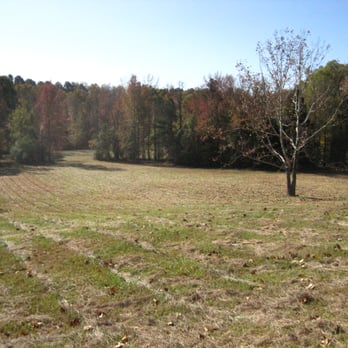
Somehow with all the hiking I've done around here over the years, I've never made it to Ayr Mount. Bad move! Ayr Mount is a restored 1800s plantation property on the north bank of the Eno River. Its 265 acres have lovely plantings and landscaping, open fields for running and flying kites, and wooded trails for dogs and their humans. The grounds and house are so beautiful that people hold their weddings/receptions here. I can see why. I didn't get a chance to do all of the 1-mile-long trail (called Poet's Walk) this trip, but next time, for sure.


2 years ago
Ayr Mount is in Hillsborough, NC. The property is on the National Register of Historic Places. The property grounds are open daily and house tours are available on certain days and times, just follow the signs to the parking area and either to the Poet's Walk (one mile trail) or the House. Ayr Mount was built in 1815 and made of brick (you can see fingerprints in some of the bricks from the workers). He named it for his birthplace in Ayr, Scotland. William Kirkland was a merchant and built his house along the Native American Trading Path. Kirkland had fourteen children and the property stayed in the family for four generations. If I remember correctly he had 57 grandchildren. Richard Jenrette bought the house in 1985 then donated it to the Classical American Home Preservation Trust and we can view the property. The house features tall ceilings; and intricate details; a lot of the furniture are family pieces. I highly recommend touring this house if in the Hillsborough Area. read more
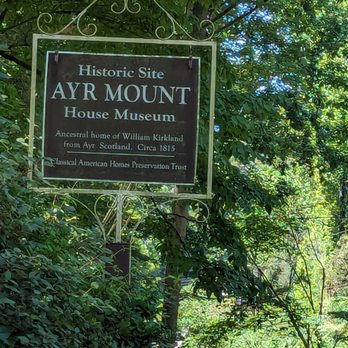


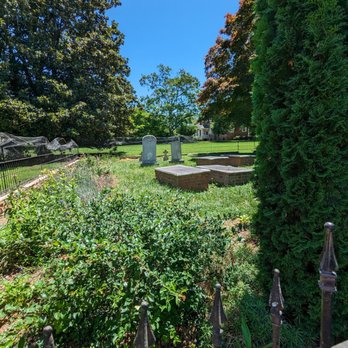


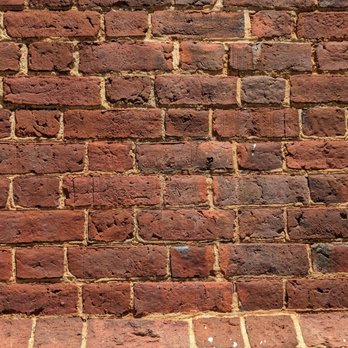

Very pleasant 1 mile walk in nature with benches near the river and a pond. The historic house was closed but the grounds were beautiful and well maintained. I didn't notice a public restroom. Parking lot available and free. read more

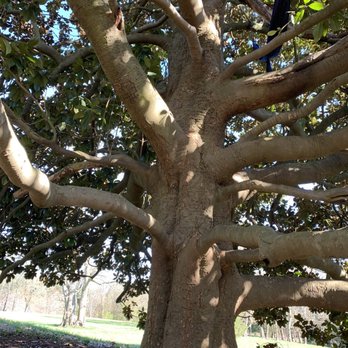
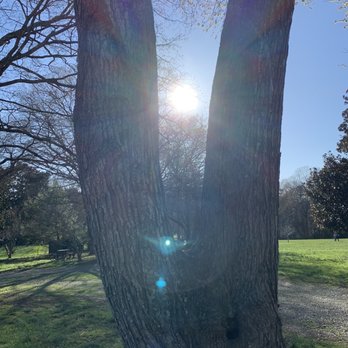
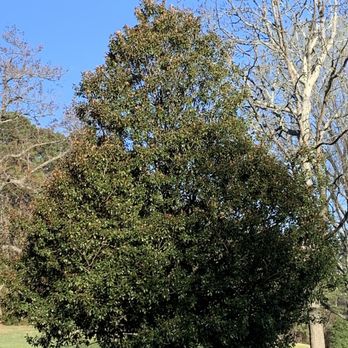


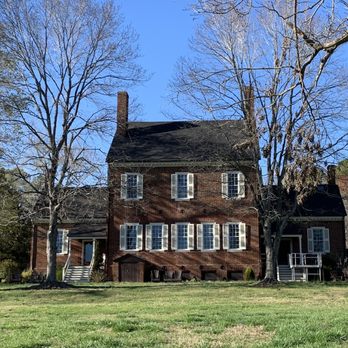
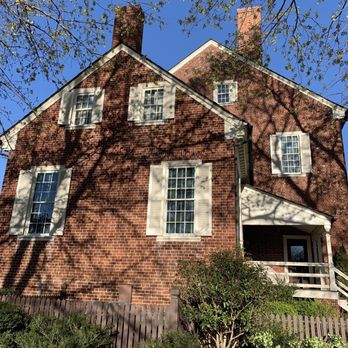


I was pleasantly surprised to hear about Ayr Mount because of a wedding I was working on the property. It consists of a beautiful piece of land in Hillsborough, a fifteen minute drive from North Durham. Ayr Mount houses walking paths, a large pond and a federal-era plantation house that has been restored and offers in-season tours for $12/person. The property is free to visit in season (March 15-December 15, Wed-Sat 11am until sunset, Thur-Sun 2pm until sunset) and makes for the perfect picnic destination if you're looking to enjoy the weather. The grounds are lovely, not lots of flowers or bushes but as far as you can see manicured green lawns. And unless you're interrupt a wedding, you'll be one of only a handful of people at the property. I would definitely recommend calling ahead of showing up as they do host a lot of events (weddings) here and I wouldn't want you to be turned away. I'm already itching for the summer again so I can pack a picnic to bring here and enjoy the Poet's Walk. I haven't toured the house, but I look forward to participating in that as well (I would also call ahead if you plan to tour the house--although Ayr Mount is well known in Hillsborough, it is a small establishment and thus schedules can change quickly). read more


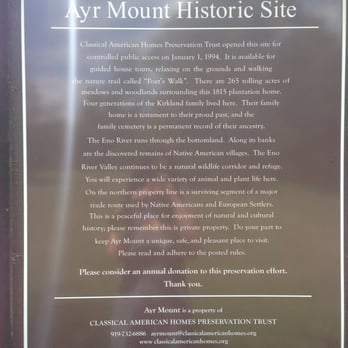


Somehow with all the hiking I've done around here over the years, I've never made it to Ayr Mount. Bad move! Ayr Mount is a restored 1800s plantation property on the north bank of the Eno River. Its 265 acres have lovely plantings and landscaping, open fields for running and flying kites, and wooded trails for dogs and their humans. The grounds and house are so beautiful that people hold their weddings/receptions here. I can see why. I didn't get a chance to do all of the 1-mile-long trail (called Poet's Walk) this trip, but next time, for sure. read more




8 years ago

11 years ago
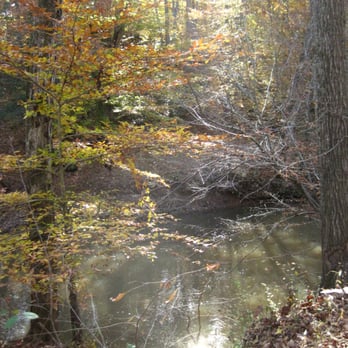
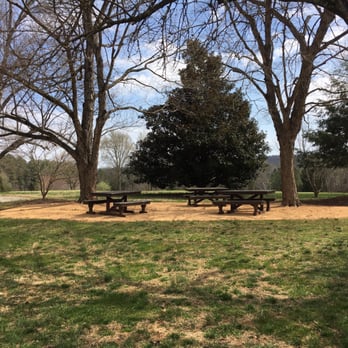
This review is for the park grounds and the walking trail called Poet's Walk. We came to Hillsborough to check out the new Bona Fide sandwich shop and we weren't the only ones that had the same idea of eating our sandwiches on the grounds of Ayr Mount. As you pull into Ayr Mount, you enter a quiet, green and serene historic area where the speed limit drops to 8mph and you make your way through the gravel lot to the house in the distance. This early 19th century home is a beautiful icon in the distance and sits amidst acres and acres of green land bordering the Eno river. We took our bag of sandwiches and sat at one of the picnic tables. It was extremely quiet and the perfect place to enjoy a lunch and be out in nature. After our lunch, we headed down the trail to Poet's walk and made our way to the Eno River. We then turned the other direction toward a pond and I noticed there were always park benches and places to sit. I saw a few people with dogs and it is another beautiful place in Orange County to take a stroll. Poet's walk is about 1 mile so I would wear comfortable walking shoes. This is a perfect location for a picnic and I also read in the brochure that it is a great venue for weddings, events, and photo shoots. If you want to get away from the noise and busy world, come here to unwind and take in the beauty of the scenery and nature. read more



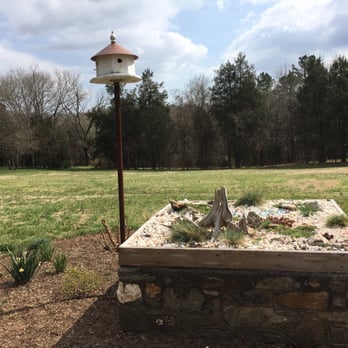


11 years ago

12 years ago
11 years ago
More info about Ayr Mount
376 Saint Marys Rd
Hillsborough, NC 27278
Directions
(919) 732-6886
Call Now
Hours
From the Business
Ask the Community - Ayr Mount
Review Highlights - Ayr Mount


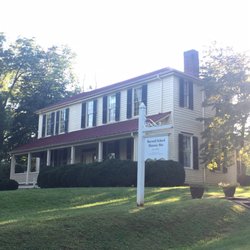


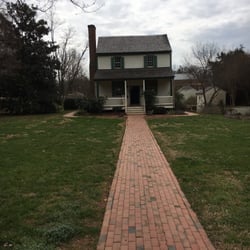



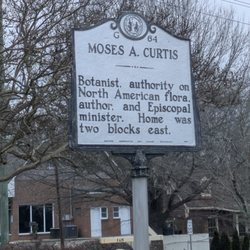



Why does Yelp recommend reviews?
1 review that is not currently recommended
The reviews below are not factored into the business's overall star rating.
15 years ago
Ayr Mount - landmarks - Updated October 2026
Best of Hillsborough
People found Ayr Mount by searching for…
Public Running Track in Hillsborough, NC
Beautiful Views in Hillsborough, NC
Places to Take Pictures in Hillsborough, NC
Hiking Trails With Waterfalls in Hillsborough, NC
Picnic Areas in Hillsborough, NC
Public Shower in Hillsborough, NC
Sunset View in Hillsborough, NC
Things to Do in Hillsborough, NC
Watch Sunset in Hillsborough, NC
Scenic Drive in Hillsborough, NC
Arts & Entertainment in Hillsborough, NC
Walking Trails in Hillsborough, NC
Baby Shower Venues in Hillsborough, NC
Historical Tours in Hillsborough, NC
Hidden Gems in Hillsborough, NC
Field Trips in Hillsborough, NC
Flower Field in Hillsborough, NC
Baby Shower Locations in Hillsborough, NC
Plantation Tours in Hillsborough, NC
Urban Exploration in Hillsborough, NC
Trending Searches in Hillsborough, NC
Beautiful Views near Ayr Mount
Halloween Events near Ayr Mount
Historical Sites near Ayr Mount
Kids Birthday Party near Ayr Mount
Landmarks & Historical Buildings near Ayr Mount
Pick Your Own Farms near Ayr Mount
Places To Take Pictures near Ayr Mount
Pumpkin Patches near Ayr Mount
Scenic Night View near Ayr Mount
Scenic Overlook near Ayr Mount
Small Venues & Event Spaces near Ayr Mount
Browse Articles
Browse Nearby
BEST of Hillsborough, North Carolina Restaurants near Ayr Mount
BEST of Hillsborough, North Carolina Coffee near Ayr Mount
BEST of Hillsborough, North Carolina Things to Do near Ayr Mount
BEST of Hillsborough, North Carolina Hiking near Ayr Mount
BEST of Hillsborough, North Carolina Shopping near Ayr Mount
BEST of Hillsborough, North Carolina Breakfast near Ayr Mount
Browse Brands
Related Searches in Hillsborough, NC
Best Lookout Points to Visit in Hillsborough, North Carolina
Book Engaging Historical Tours in Hillsborough, North Carolina
Discover Charming Historic Homes in Hillsborough, North Carolina
Discover Famous Monuments in Hillsborough, North Carolina
Discover Historic Sites and Places in Hillsborough, North Carolina
Discover Lakes & Ponds to Explore in Hillsborough, North Carolina
Discover Popular Landmarks in Hillsborough, North Carolina
Discover Popular Photo Spots in Hillsborough, North Carolina
Discover Stunning Skyline View Spots in Hillsborough, North Carolina
Discover Top Nature Parks to Visit in Hillsborough, North Carolina
Discover the Best Interactive Museum in Hillsborough, North Carolina
Discover the Best Military Museum in Hillsborough, North Carolina
Enjoy the Best Walking Trails in Hillsborough, North Carolina
Experience Stunning Sunset Views in Hillsborough, North Carolina
Explore Beautiful Botanical Gardens in Hillsborough, North Carolina
Explore Beautiful Castles and Landmarks in Hillsborough, North Carolina
Explore Beautiful Parks and Green Spaces in Hillsborough, North Carolina
Explore Children's Museums Near Hillsborough, North Carolina
Explore Free Things to Do Around Hillsborough, North Carolina
Explore Fun Activities to Do in Hillsborough, North Carolina
Explore Fun Field Trips in Hillsborough, North Carolina
Explore Popular Scenic Overlook Points in Hillsborough, North Carolina
Explore Popular Scenic Views Near Hillsborough, North Carolina
Explore Popular View Points Around Hillsborough, North Carolina
Explore Secret Spots Worth Visiting in Hillsborough, North Carolina
Explore Top Art Galleries Located in Hillsborough, North Carolina
Explore Venues & Event Spaces in Hillsborough, North Carolina
Explore the Top Car Museum in Hillsborough, North Carolina
Find Beautiful Views in Hillsborough, North Carolina
Find Top Art Museums in Hillsborough, North Carolina
Find the Best Bridge Spots in Hillsborough, North Carolina
Find the Best Parks for Picnics in Hillsborough, North Carolina
Find the Best Playgrounds to Visit in Hillsborough, North Carolina
Must-See Tourist Attractions Around Hillsborough, North Carolina
Plan a Scenic Drive Route Near Hillsborough, North Carolina
Popular Picnic Spots to Visit in Hillsborough, North Carolina
Popular Places to Take Pictures in Hillsborough, North Carolina
Popular Places to Walk Around in Hillsborough, North Carolina
Popular Things to Do in Hillsborough, North Carolina
Popular Things to See in Hillsborough, North Carolina
Safe and Fun Places to Walk at Night in Hillsborough, North Carolina
Top Hiking Trails to Explore in Hillsborough, North Carolina
Top Places to Visit in Hillsborough, North Carolina for Sightseeing
Top-Rated Plantation Tours Near Hillsborough, North Carolina
Tour Famous Lighthouses Located in Hillsborough, North Carolina
Tour Popular Historical Sites in Hillsborough, North Carolina
Visit Beautiful Gardens in Hillsborough, North Carolina
Visit Popular Museums in Hillsborough, North Carolina Now
Visit a Free Museum Near You in Hillsborough, North Carolina


