Apollo Monument Photos


More like Apollo Monument
Recommended Reviews - Apollo Monument
Start your review...



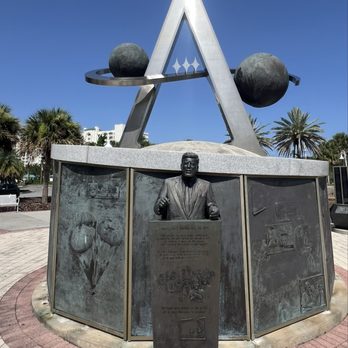
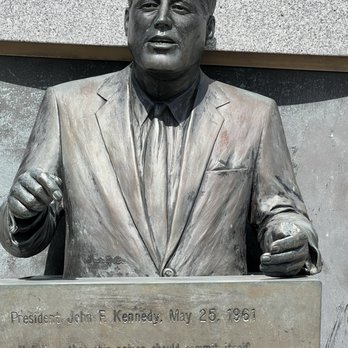
The Apollo program was NASA's human spaceflight initiative that fulfilled President John F. Kennedy's goal of landing a man on the moon and returning him safely to Earth before the end of the 1960s. Between 1961 and 1972, the program conducted 12 crewed missions, which successfully landed six astronauts on the moon. Named after the Greek god Apollo, the program forever changed the United States space program. The Apollo 1 crew Virgil "Gus" Grissom, Edward H. White II, and Roger B. Chaffe lost their lives in a devastating launchpad fire during a pre-flight test in 1967. Safety improvements led to Apollo 8 becoming the first crewed mission to leave Earth orbit, travel to the Moon, and orbit it, paving the way for the historic landing that followed. On July 20, 1969, Apollo 11 achieved one of humanity's greatest milestones when Neil Armstrong and Buzz Aldrin became the first people to walk on the Moon, while Michael Collins remained in lunar orbit aboard the command module. The program concluded with Apollo 17 in December 1972, the final lunar mission, during which astronauts spent the longest time on the Moon's surface and made extensive use of the Lunar Roving Vehicle. In all, 12 American astronauts walked on the Moon, conducting scientific experiments and returning approximately 842 pounds of lunar rocks and soil to Earth. The Apollo program remains one of the United States greatest scientific achievements. This monument, located in Space View Park as part of the U.S. Space Walk of Fame, was created to honor that legacy. Groundbreaking took place on July 16, 1999, at exactly 9:32 a.m., precisely 30 years after the liftoff of Apollo 11. Designed by Merritt Island artist Sandy Storm and dedicated in 2007, the memorial features 12 bronze panels that tell the story of the Apollo program. Bronze handprints of the Apollo astronauts surround the monument, while those who had passed away before the castings were made are honored with raised profile reliefs. It was a moving experience to place my hand where these astronauts hands once laid. A life-size statue of President John F. Kennedy stands at the center memorializing how he inspired a nation to reach for the moon. If you're familiar with the history of the space program and Apollo missions, this memorial is incredibly moving. Seeing it in person gave me a deeper appreciation for the courage, sacrifice, and determination that made the Moon landings possible. I'm very glad i had the chance to visit. read more