All Hallows By The Tower Photos


Recommended Reviews - All Hallows By The Tower
Start your review...



1 month ago
This is the oldest church in London. Words can't express how AWESOME it is to study church history. Knowing church history really puts life and religion into perspective. read more

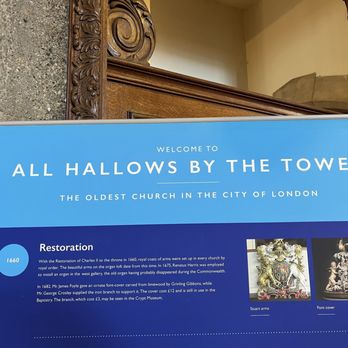


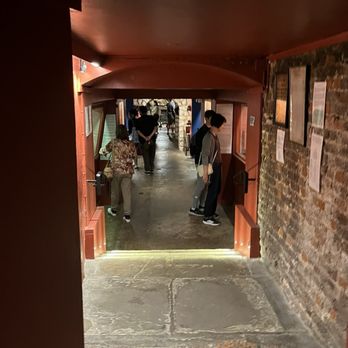
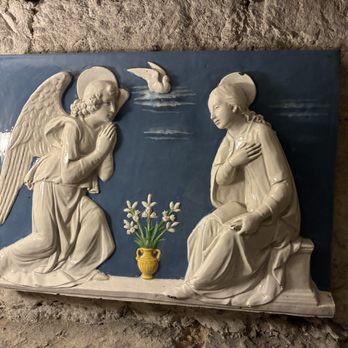


Historic. An absolute must stop and visit! 675 AD was it's founding date. It is around the corner from where executions took place on Tower Hill. Right next to the Tower of London. Seriously, don't miss seeing this church! So not to be a heretic, only imagine all which likely passed by this church over the centuries! My next trip, I intend to dedicate some hours talking to the church historian. While this church likely wasn't the center of the British Empire, it is just a few feet from it all. read more


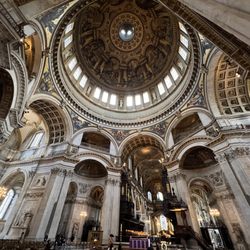
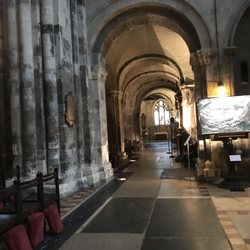
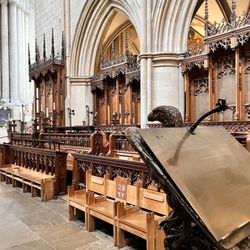
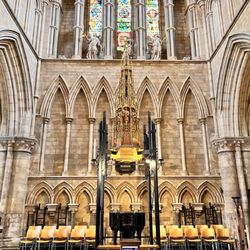
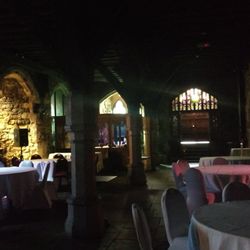
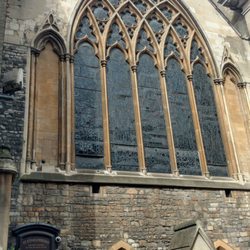
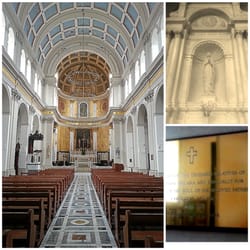
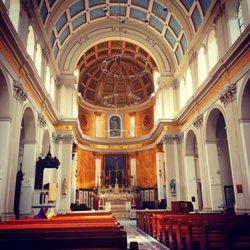
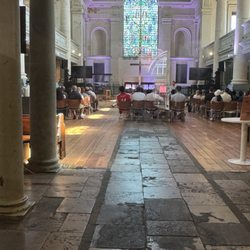
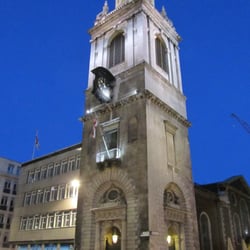
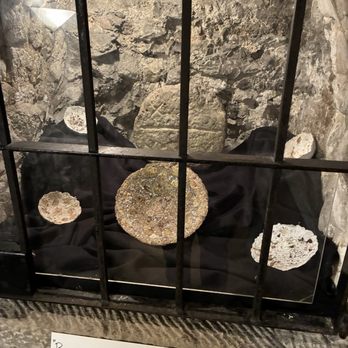
All Hallows is one of the most ancient Christian sites in London and, although not necessarily the most architecturally attractive building, is certainly one of the most historic and interesting, and one of the most accessible - it is open every day. An arch of the original 7th century Saxon building remains: beneath this, in the crypt, lies a section of an original Roman tessellated pavement, nearly 1,800 years old. Situated on a small rise above the Tower of London, the church was founded in 675AD by the Saxon Abbey of Barking. The building of the Tower of London close by gave it Royal connections, but it also served more gruesome duties: the headless bodies of executed victims were brought here, including those of Thomas More, John Fisher and Archbishop Laud (who was buried here). Other - and happier - famous associations include William Penn, the founder of Pennsylvania, who was baptised here in 1644 - his father, Admiral William Penn was a church member here. Another with an American connection, John Quincy Adams, the sixth President of the USA, was married here in 1797, as was the notorious Judge Jeffries in 1667. The church itself was rebuilt substantially throughout the mediaeval period, and mercifully survived the Great Fire of London in 1666, thanks to the efforts of Admiral William Penn who demolished adjacent buildings to create a fire-break - Samuel Pepys famously watched the fire from the church tower, before recording what he saw in his diary. Alas, all traces of this history were almost totally wiped out in 1940, when bombing destroyed all but the tower and fragments of the external walls. However, thanks to the church's energetic and forceful vicar 'Tubby' Clayton, rebuilding began in 1948, keeping to the original floorplan, to traditional gothic designs of Lord Mottistone. Some regard this rebuilding as rather dull, but the interior is enlivened by a number of memorials which were saved or painstakingly reconstructed after the War. These include a fine 16th century memorial to an Italian merchant, Hieronimus Benalius (d. 1583); the magnificent Croke altar tomb of 1477, in which sits the memorial lamp of the Toc H movement; the beautiful Tate Altar Panel, made in Bruges in 1500; an outstanding collection of some 17 mediaeval memorial brasses, including the Evyngar Brass (1533). There are more memorials in the South Aisle, including that of Francis and Captain Thomas Covell. But pride of place goes to the beautiful font cover, carved by Grinling Gibbons in 1682, regarded by many as the finest wooden carving in the City: two cherubs flank a tower of fruit and vegetables atop which is a dove. As befits a church so close to the Pool of London, there is also a Mariner's chapel and a number of models of ships donated in thanksgiving. The history continues in abundance beneath the church, in the vaults; there are two small crypts for private prayer: the barrel-vaulted St Francis Chapel, c. 1280, and the tiny vaulted Oratory of St Clare. From beneath the tower is the entrance to the main crypt. The Roman tessellated pavement (from the floor of a 2nd century house) can clearly be seen on your left as you descend the steep steps, and a smaller portion on the floor of the crypt itself. Once inside, it is effectively a museum: there are displays of Roman archaeology, church plate, old church registries (All Hallows has one of the most complete collections of these), remnants of a 7th century Saxon cross from the original foundation, and a lovely model of Roman London. At the end is a small Undercroft chapel, where Archbishop Laud was buried for 20 years after his execution, as well as the location of at least three Saxon coffins (buried pre-1066). The stone altar is said to have been brought back by 12th-Century Crusaders from Castle Athlit in Palestine. In all, All Hallows provides a fascinating and much over-looked place to visit. In addition to its religious services, it offers tea and coffee in a small cafe area, as well as brass rubbing, regular organ recitals and concerts, and occasional exhibitions. read more


13 years ago